
Vegan Sushi Guide

1. Basics of Vegan Sushi
What is vegan sushi
Vegan sushi refers to sushi made exclusively with plant-based ingredients without using any animal products (seafood, eggs, dairy products, etc.). While traditional sushi features seafood as the main ingredient, vegan sushi creatively uses vegetables, fruits, tofu, seaweed, mushrooms, and other plant-based ingredients.
Characteristics of vegan sushi:
No animal products used whatsoever
Plant-derived ingredients such as vegetables and fruits take center stage
Soy products (tofu, fried tofu pouches, etc.) and seaweed are utilized as fish substitutes
Crafted to be enjoyable in both appearance and taste
Lower environmental impact, promoting sustainable food culture
Vegan sushi is popular not only among vegetarians and vegans but also with people who have seafood allergies, those with strong health consciousness, and those who wish to maintain an environmentally conscious diet. Additionally, it shares many aspects with traditional Japanese shojin ryori (Buddhist cuisine), attracting attention both in Japan and internationally as a new form of Japanese cuisine.

The history of plant-based eating in Japan and its connection to shojin ryori
In Japan, a plant-based food culture called "shojin ryori" has developed since ancient times under the influence of Buddhism. Shojin ryori became widespread particularly during the Kamakura period (12th-14th centuries) after Buddhism was introduced to Japan in the 6th century. This cooking method, based on the Buddhist teaching of non-killing, creates meals centered around seasonal vegetables, wild plants, seaweed, and beans without using animal products such as meat or fish.

Characteristics of shojin ryori:
Avoiding the five pungent roots (gokun: chives, garlic, scallions, onions, and asatsuki)
Valuing seasonal ingredients
Creative use of "dashi" (broth made from kombu kelp, shiitake mushrooms, etc.)
Cooking methods that bring out the natural flavors of ingredients
In shojin ryori, "substitution" techniques have evolved; for example, methods of processing foods like konjac, yuba (tofu skin), and tofu to recreate the texture and flavor of fish and meat have been developed. These techniques and concepts have greatly influenced modern vegan sushi.
Records show that during the Edo period, chefs serving the shogun's family applied shojin ryori techniques to create "shojin-zushi," a plant-based sushi. This can be considered the forerunner of modern vegan sushi.
Thus, vegan sushi is not simply an application of Western veganism to Japanese food, but rather a modern reinterpretation of the wisdom and techniques of plant-based eating that have existed within Japanese food culture.
2.Basic Plant-Based Ingredients
Vegan sushi uses a variety of plant-based ingredients including vegetables, mushrooms, and soy products. Here are their characteristics and ways to use them in sushi:
King oyster mushroom
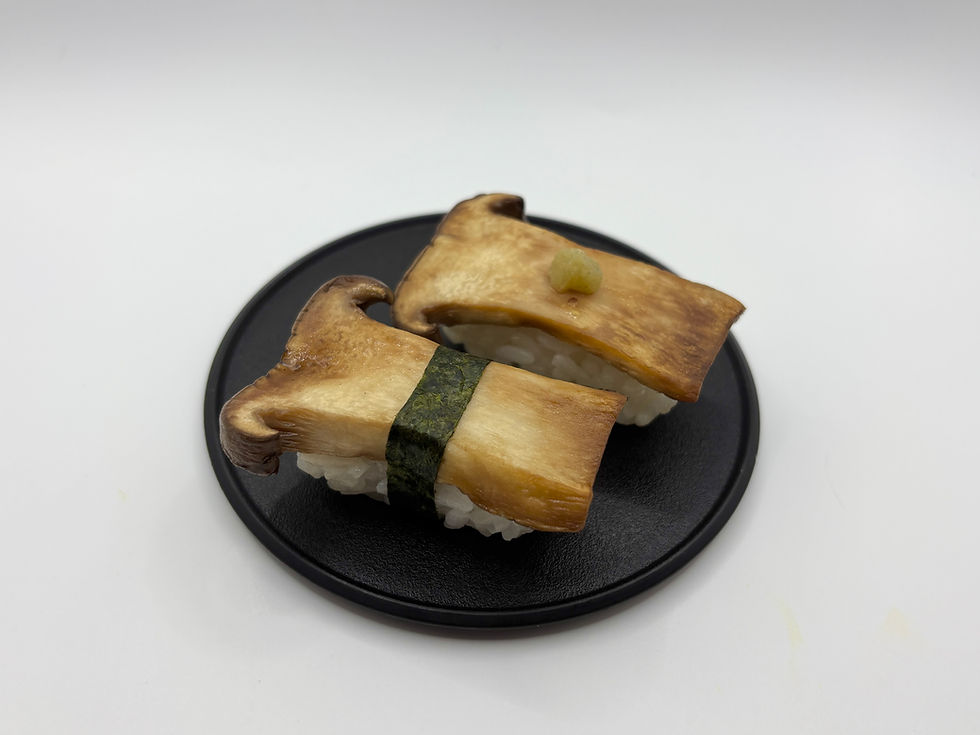
King oyster mushrooms have a thick, chewy texture that makes them ideal for recreating fish-like textures.
Characteristics: Rich umami flavor and elastic texture
Preparation method: Slice thinly and lightly salt to firm up, or simmer lightly in soy sauce and mirin to use as ingredients for nigiri or maki sushi
Complementary ingredients: Wasabi, soy sauce, kombu

Eggplant
Eggplant becomes soft when heated and develops a unique sweetness, making it a popular ingredient for nigiri sushi.
Characteristics: When grilled, its sweetness increases and it develops a melt-in-your-mouth texture
Preparation method: Slice thinly, grill, and lightly season with soy sauce and sugar for an "anago (sea eel)" like flavor
Complementary ingredients: Ginger, shiso leaf, sesame

Cucumber
Cucumber is an essential, classic sushi ingredient. It features a crisp texture and refreshing flavor.
Characteristics: High water content with a light, refreshing taste
Preparation method: Cut into thin strips or rounds for maki or hosomaki. Salt-rubbing releases moisture and improves texture
Complementary ingredients: Avocado, plum paste, sesame

Radish
Radish has a vibrant color and a spicy, piquant flavor.
Characteristics: Crisp texture with a mild spiciness and bright red color
Preparation method: Slice thinly to place on top of nigiri, or cut into strips to use as an ingredient in maki sushi
Complementary ingredients: Avocado, yuzu kosho, microgreens

Carrot
Carrots are sweet and colorful, adding vibrancy to sushi's appearance.
Characteristics: Natural sweetness and bright orange color
Preparation method: Cut into thin strips or julienne and lightly pickle with vinegar and sugar for a "beni-shoga (red pickled ginger)" like flavor. Alternatively, slice thinly and lightly firm up in salt water to improve texture
Complementary ingredients: Avocado, wasabi, ginger

Bell pepper
Bell peppers are colorful and sweet, enriching both the appearance and flavor of sushi.
Characteristics: Available in diverse colors like red, yellow, and orange, with natural sweetness
Preparation method: Use raw in thin slices, or lightly sauté to enhance sweetness. Lightly pickle with salt and vinegar to create a sushi-friendly flavor
Complementary ingredients: Avocado, basil, olive oil

Chinese cabbage
Chinese cabbage has a crisp texture and gentle sweetness.
Characteristics: High water content with a refreshing texture
Preparation method: Thinly slice the core and lightly salt to create a crunchy sushi topping. The leafy parts can be lightly pickled for use in gunkan maki
Complementary ingredients: Plum paste, wasabi, yuzu

Spinach
Spinach is a nutritious, flavorful green ingredient.
Characteristics: Rich in iron with a distinctive flavor
Preparation method: Lightly blanch, squeeze out excess water, and season with soy sauce and sesame oil for ideal maki or gunkan maki filling
Complementary ingredients: Sesame, garlic, ginger

Inari (fried tofu pouch)
Fried tofu pouches are traditional inari sushi ingredients that work excellently in vegan sushi as well.
Characteristics: Sweet-savory flavor with a unique texture
Preparation method: Simmer the fried tofu pouches in soy sauce, mirin, and sugar to use as inari sushi wrappers. Fill with sushi rice and other ingredients
Complementary ingredients: Burdock root, carrot, edamame

By combining these ingredients, you can create colorful vegan sushi with balanced nutrition. Another charm of vegan sushi is the ability to enjoy seasonal flavors by incorporating vegetables that are in season.
Seasonings and Secret Ingredients for Flavor Adjustment
To enrich the flavor of vegan sushi, the cooking methods and seasoning of vegetables and plant-based ingredients are crucial. Below are some basic and simple seasoning recipes for adjusting the taste of vegan sushi:
Basic Quick Pickling Recipe
A cooking method that lightly salts vegetables to enjoy their crisp texture and refreshing flavor.
Recommended for vegetables like: Napa cabbage
Ingredients: Vegetables of your choice (cucumber, daikon radish, carrot, etc.) ・Salt 1/2-1 teaspoon ・Ginger 1/4
Preparation:
1. Cut vegetables into bite-sized pieces
2. Place vegetables and salt in a bowl, lightly massage, and let sit for about 5 minutes
3. Massage in grated ginger and let sit for another 20 minutes
4. Lightly squeeze out excess water and it's ready
Basic Marinade Recipe
Characterized by acidity and aroma, it gives vegetables a deep flavor.
Ingredients: Vegetables of your choice (bell peppers, onions, mushrooms, etc.) ・Olive oil 1 tablespoon ・Vinegar 1 tablespoon ・Salt 1/4 teaspoon ・Soy sauce 1 teaspoon
Preparation:
1. Cut vegetables into 1mm cubes
2. Mix all seasonings together
3. Combine vegetables with the mixed seasonings and marinate in the refrigerator for 30 minutes
Basic Teriyaki Recipe
Characterized by its sweet and savory flavor and glossy appearance, when used with mushrooms or tofu, it can recreate the taste of "unagi (eel)" or "teriyaki chicken."
Ingredients: Soy sauce 1 tablespoon ・Mirin 1 tablespoon ・Sake 1 tablespoon
Preparation:
1. Put all your favorite vegetables in a frying pan and heat over medium heat
2. Once the vegetables are cooked, reduce the heat and add the seasonings to coat the vegetables
Basic Sweet and Sour Pickling Recipe
Ingredients: Vinegar 1 tablespoon ・Sugar 1/2 tablespoon ・Salt a pinch
Preparation:
1. Slice vegetables thinly or cut into strips
2. Mix all seasonings together to make the sweet and sour mixture
3. Combine vegetables with the sweet and sour mixture and marinate in the refrigerator for at least 1 hour
Ready-to-use Seasonings
White miso: Adds a creamy texture and gentle sweetness
Ponzu sauce: Excellent paired with lotus root. You can taste the acidity of vinegar and umami.
3. Popular Vegan Sushi
King oyster mushroom nigiri
Cucumber temari sushi

Quick-pickled chinese cabbage maki

Eggplant nigiri

Carrot rapée and marinated bell pepper gunkan

Red konjac nigiri

4.Introduction to Vegan Sushi Lessons at Sushi Lab.
A unique sushi-making experience with an all-original menu conceived by Sushi Lab.!
When you think of sushi, you think of fish.
Actually, We can make delicious Sushi that uses Vegan food with Vegetables and mushrooms.
In this class, we will teach you how to make sushi and serve vegan meals.
Learn from making sushi rice, and even vegans can experience the very popular Japanese food, SUSHI!
[VEGAN SUSHI CLASS]
JPY10,000 yen
Date and Time: Please inquire at the time of reservation.
Place: Sushi Lab. by Sumaya
(3rd floor of a building with a hair salon called Salon Roll)
Maximum: 10 participants
[What's included]
・Vegan Sushi (More than 5 kinds of nigiri, temari, etc... ...)
・Vegan meal (About 3 kinds of meal)・Recipes
・Soft drink
・Welcome drink
※Ingredients and meals vary depending on the season.


Comments