The reason for eating Hamo(pike conger) in June and July and Kyoto traditions

1. What is a "hamo(pike conger)"?
Hamo (pike conger) is a marine fish belonging to the family Muraenesocidae in the order Anguilliformes. It is a large carnivorous fish that lives in rocky areas and sandy bottoms along the coast, and can reach a length of about 2 meters. It has a slender body shape similar to that of an eel, but it has a large mouth with sharp teeth lining both its upper and lower jaws.
As its appearance suggests, it has an extremely ferocious temperament, and is feared by fishermen and cooks alike, who say it will bite even after being brought ashore. The most likely origin of its name is that it "bites" with its sharp teeth.

2. Make your summer trip to Kyoto 10 times more enjoyable! three reasons why you should eat "Hamo" (Hamo) in July
Walking around Kyoto in the summer, you're bound to see the word "hamo" (Hamo) on the signs of restaurants and on the menus of riverside eateries. Why is summer in Kyoto so dominated by the image of hamo?
Hidden within it lies the history of "the tenacity of our predecessors" who overcame Kyoto's challenging geographical conditions, and the "tremendous craftsmanship of the chefs" who transformed it into the ultimate gourmet experience.
Reason ①: It was the only fish that reached Kyoto alive, a city far from the coastline.
While we have refrigeration and freezing technology today, in the past, it was impossible to eat "raw fish" in Kyoto, a basin far from the sea. Kyoto, especially in the middle of summer, is unbearably hot. Even if they tried to transport fish from ports in Fukui or Osaka, it would inevitably spoil along the way.
Amidst all of this, the only thing that made it to Kyoto alive was the Hamo.
Hamo eels are incredibly resilient, possessing such strong vitality that they can survive even when taken out of the water and placed in muddy water. Transported from the seas of Awaji Island and Akashi in the summer heat, these eels remained fresh, making them "the only precious raw fish that could be eaten in the middle of summer" for the people of Kyoto at the time, and a source of stamina.

Reason ②: The wisdom and ingenuity of the craftsman who transformed a tough, bone-filled enemy into a "supreme delicacy."
However, even though the fish arrived alive, there was a major catch: it had an unusually large number of tiny, hard bones. Their entire bodies were filled with thousands of small bones, making them completely impossible to eat as they were.
Refusing to give up on such a fresh resource, Kyoto's chefs applied tremendous dedication and ingenuity to develop a unique technique: "Hone-kiri" (bone-cutting), which originated right here in Kyoto.
This process is a masterful showcase of knife skills, involving leaving only a thin layer of skin intact while making 24 or more precise cuts within a mere 1-inch (approx. 3 cm) width to finely chop the small bones. The rhythmic "shhh, shhh" sound of the blade echoing through the kitchen is a quintessential summer scene in Kyoto. This exceptional skill successfully transforms a bony fish into a supreme delicacy that melts softly in your mouth.

Reason ③: Because there are "bone-cutting knives" that have been made specifically for this technique.
Surprisingly, chefs in Kyoto use a specialized knife made exclusively for this "Hone-kiri" process. This knife is called a "Honekiri-bocho" (Hamo bond cutting knife).
Unlike a regular yanagiba knife (sashimi knife), it features a wider blade and a heavy, sturdy weight.
To reliably and cleanly cut through a massive quantity of fine bones, chefs must utilize the momentum of the blade to "cut through the bone with the weight of the knife," which led to this unique design. The craftsman controls this heavy knife with millimeter precision, accurately chopping only the small bones without piercing the skin.
Creating specialized tools for a single fish and a single technique, and refining them over hundreds of years—this is the very essence of Kyoto's profound culinary culture.
3. Kyoto's Food Culture You Should Know: The Surprising History of the Gion Festival and the "Hamo Festival"
The Gion Festival is a symbol of summer in Kyoto. This festival, in which various Shinto rituals are performed throughout the month of July, is actually also known as the "Hamo Festival" (pike conger festival) among the local people of Kyoto.
Why did a sacred festival that has continued for over a thousand years come to be named after a fish? There's a surprising historical reason behind it, related to how people endured Kyoto's harsh summers.

Reason ①: During the festival, the whole city of Kyoto becomes "all about Hamo."
In July, when the Yamahoko Junko (procession of floats), the highlight of the Gion Festival, takes place, the city of Kyoto is enveloped in excitement. During this time, you'll be surprised to see that eel dishes appear on the tables of ordinary households and long-established restaurants throughout Kyoto.
Hamo eels are eaten in all sorts of forms, such as boiled eel, sushi, and tempura, as a treat to entertain relatives and friends who come to see the festival, or as a dish to pray for the health of the family. The sound of "shhh, shhh" as eels are being deboned can be heard all over town, and the sight of fishmongers' storefronts overflowing with eels has led to the Gion Festival eventually becoming known as the "Hamo Eel Festival."
Reason ②: A festival to pray for the eradication of disease.
The Gion Festival originally began in the Heian period as a way to appease the gods and pray for good health and protection from illness, in order to quell the "plague (infectious disease)" that was rampant in Kyoto. Summer in Kyoto, which is located in a basin, was far harsher than it is today, and in the past, when sanitary conditions were poor, many people lost their lives.
That's when the people of Kyoto took notice of the Hamo's incredible vitality.
The idea that "we can overcome this harsh summer and the epidemic by incorporating the powerful energy of the Hamo into our bodies, which can withstand the intense summer heat," perfectly linked with the spirit of the Gion Festival, which prays for the eradication of disease.
Reason ③: Because it coincides with the "best season" when the flavor is at its best.
There's another practical and happy reason: July, when the Gion Festival takes place, is the time of year when Hamos are at their most delicious.
In July, as they prepare to spawn, Hamos accumulate plenty of nutrients, becoming plump and fatty. It is precisely because the timing of Kyoto's traditional events perfectly coincides with the peak season provided by nature that Hamos have not been a fleeting trend, but have been loved as the "star of festivals" for hundreds of years.
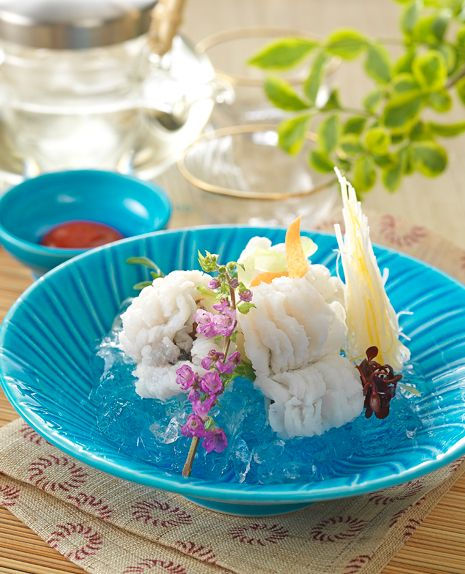
Lastly Travel tidbits to enhance your experience: Does Hamo have "two" best seasons?
Actually, among Kyoto chefs, it is a well-known secret that "Hamo has two peak seasons each year."
The first is the refreshing "White Hamo" during the Gion Festival period. And the second arrives in autumn, right around the time when highly prized matsutake mushrooms become available. During this time, the fish become even richer in fat, glowing with a golden hue, earned them the name "Kin-Hamo" (Golden Hamo) or "Ochi-Hamo."


Comments